Search every volume:
Volumes
-
 Vol 1 Overview & Decision Tree What a nixie clock is, the ways to get one, and which path fits your bench
 -
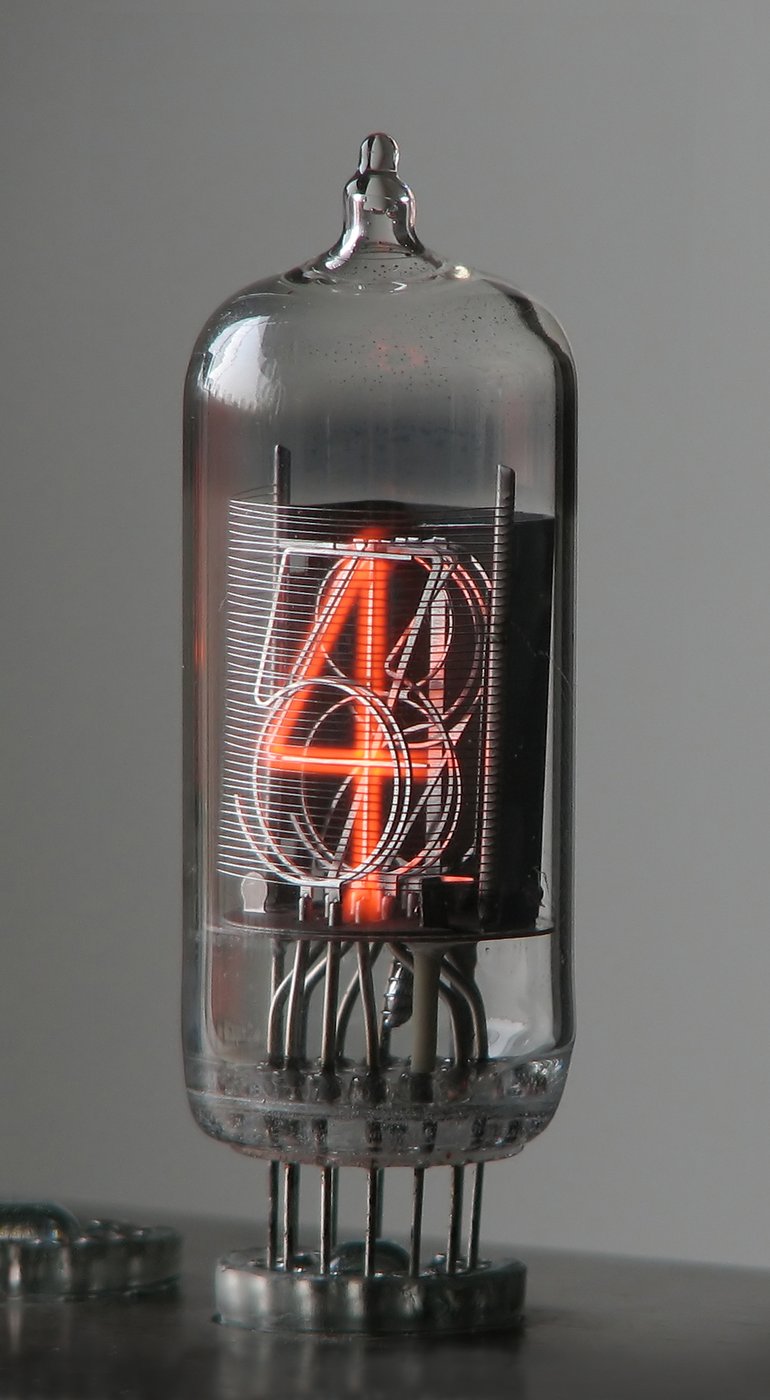 Vol 2 How a Nixie Tube Works The cold-cathode glow discharge that sculpts a glowing numeral, and the strike/maintain physics that governs how you drive it
 - Vol 3 Vol 3 The High-Voltage Supply Making a clean ~180 V rail from a 12 V brick, regulating it, measuring it without dying, and bleeding it down
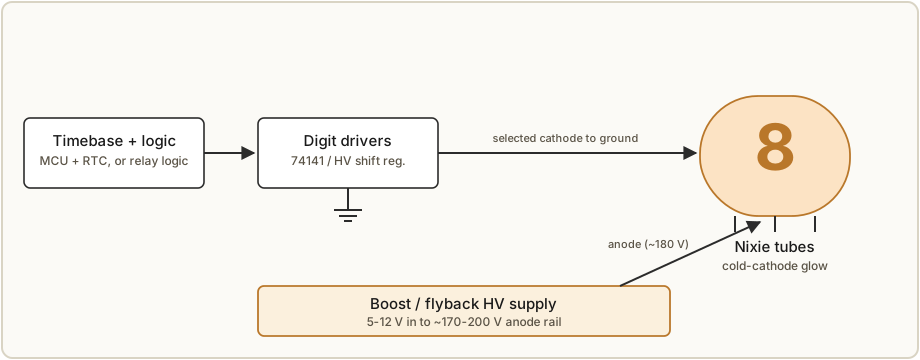
- Vol 4 Driving the Digits How to pull one cathode to ground while nine others stand off the anode rail — 74141s, HV shift registers, discrete transistors, multiplexing, and dimming
- Vol 5 Vol 5 Timebase & Logic The clean 1 Hz tick, the RTC and crystal-vs-mains choice, the firmware that counts it — and the clock that counts with no chip at all
- Vol 6 Vol 6 Build It Yourself — the ATMega Cool Nixie Clock From the owned design files to a glowing clock: schematic, BOM, PCB, firmware, bring-up, calibration
- Vol 7 Vol 7 Buy a Kit or Finished Clock The buy-it end of the decision tree — Dalibor Farný's art clocks, the kit houses, the cheap AliExpress boards, and where the tubes come from
- Vol 8 The Collected Projects A guided walk-through of every nixie project in this hub — the flagship ATMega build, the Lamina craft clock, the relay-logic novelty, and the Covert Bombe concept
- Vol 9 Enclosure, Finishing & the Themed/Steampunk Treatment Mounting fragile glass, keeping the 170-volt rail off touchable metal, and dressing the clock in brass — up to a WWII-cryptography design study
- Vol 10 Vol 10 Safety The mandatory high-voltage brief for a ~170-200 V nixie supply — the discharge procedure, the working rules, measuring the rail without dying, NOS-tube handling, and the first-power-up checklist
- Vol 11 Vol 11 Cheatsheet & Glossary The laminate-ready reference card — tube data, driver tables, HV formulas, timebase notes, the two reference designs, vendors, and an A-Z of every term the series uses